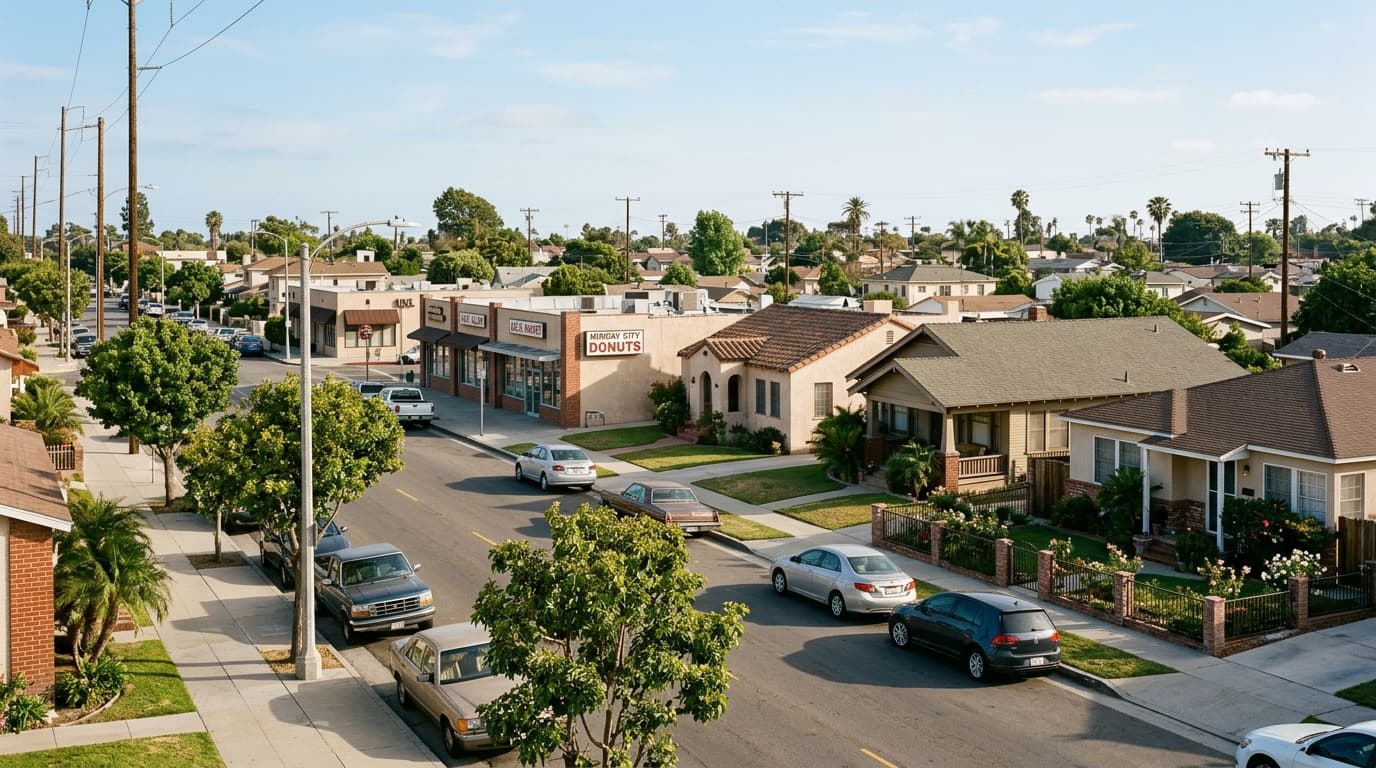
Midway City Micro-Neighborhood Spotlight: Unlocking High-Cap Infill Investment Corridors
By Global Estate Hub, CA DRE #02039890, Century Financial Group, Corp.
“Why Midway City's mix of unincorporated-area zoning, older housing stock and commercial corridors creates infill opportunities, and what to verify first.”
Infill investing means adding value within an established area, by building on underused lots, redeveloping older properties or upgrading existing buildings, rather than going to the edge of the region for raw land. In an Orange County where available land is scarce, infill is one of the few ways to create new housing or improved commercial space. Midway City, a small community with a distinctive mix of housing, commercial corridors and jurisdictional boundaries, offers a good case study.
This is a general overview for investors who want to understand where to look and what to check. It is not an offer or recommendation of any specific property.
Why Infill Gets Attention
Several factors make infill compelling:
- Scarcity. There is very little vacant land left in central Orange County, which gives well-located redevelopment sites strategic value.
- Existing infrastructure. Utilities, roads and services are already in place.
- Demand. Housing need across Southern California is well documented, and policy has been shifting to encourage more units on existing lots.
- Older stock. Aging buildings on large lots often have land value exceeding structure value.
Understanding the Jurisdiction
Midway City is an unincorporated community, which means land use is governed by the county and not by a city. Rules on zoning, setbacks, density, parking and permitting can differ from nearby incorporated cities such as Westminster or Garden Grove, so a property's address alone does not tell you what you can do with it. Confirm jurisdiction, zoning designation and allowed uses with the relevant planning authority before assuming any development potential.
What High-Cap Really Means
Investors often talk about high cap rates, meaning high income relative to price. A high cap rate can reflect strong cash flow, but it can also reflect higher risk: older buildings, deferred maintenance, weaker tenants or uncertainty about entitlements. Evaluate the reason behind the number rather than the number alone.
Common Infill Strategies
- Accessory dwelling units (ADUs): Adding a unit to an existing lot, under state and local rules that have become more accommodating in recent years.
- Small multi-unit conversions or additions: Increasing rentable units where zoning allows.
- Teardown and rebuild: Replacing an obsolete structure with a more productive one.
- Commercial repositioning: Updating a tired retail or service property to attract stronger tenants.
- Lot assembly: Combining adjacent parcels for a larger project, which requires patience and careful negotiation.
Due Diligence Checklist
- Confirm zoning, allowed density and setback requirements.
- Review title, easements and any recorded restrictions.
- Investigate utility capacity, including sewer and water connections.
- Order environmental and physical inspections, especially for older commercial buildings.
- Estimate realistic construction costs, timelines and permit fees.
- Analyze rents and comparable properties to underwrite stabilized income.
- Understand tenant rights and local rent regulations where existing tenants occupy the property.
Financing and Risk
Construction and value-add projects often require different financing from a standard purchase, with attention to draw schedules, reserves and exit strategy. Cost overruns, delays and market shifts are real risks. Build contingency into both budget and timeline, and keep liquidity available.
Know Your Exit
Define your plan from the start: hold for cash flow, refinance after stabilization, or sell. Each exit has tax and market implications, and the best investors know theirs before they buy.
Local Knowledge Reduces Risk
In a market with jurisdictional nuance, experience on the ground is a major advantage. Reviewing the specifics of a parcel with a team that knows the area can prevent costly assumptions.
A Common Question
Does unincorporated status make permitting easier or harder? Neither automatically. It simply means the county, not a city, sets the rules, so you need to confirm requirements with the correct agency. Do not assume that rules from a neighboring city apply.
Request a Private Review of Midway City investment opportunities and we will help you evaluate them against your goals.
Disclosure: This article is general information only and is not legal, tax or financial advice. Please consult your CPA, attorney or lender about your situation. Licensed California real estate professional (DRE #02039890) with Century Financial Group, Corp. (DRE #01930905), 8295 Bolsa Avenue, Midway City, CA 92655.
General information only; not legal, tax, or financial advice. Equal Housing Opportunity. Licensing & fair housing disclosures